
Awaab's Law
Awaab’s Law requires social landlords in England, including councils and housing associations, to investigate and address serious hazards within defined timeframes.
From 30 November 2026, Phase 2 expands the requirements to cover a wider range of significant hazards, making clear records, rapid response and effective repair management more important than ever.
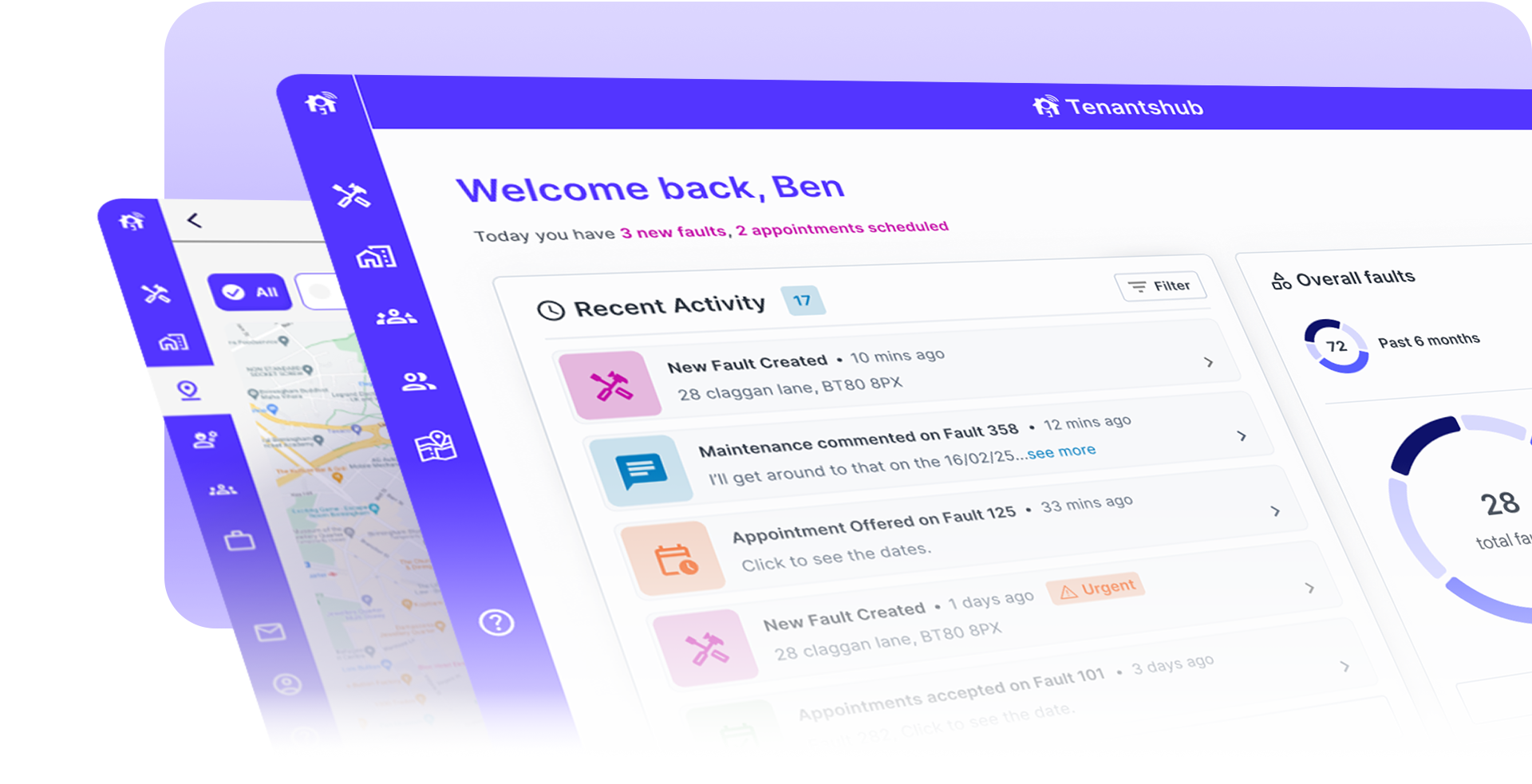
Awaab's Law Compliance Deadlines

Track hazards, actions and deadlines for Awaab’s Law
Social landlords need to stay compliant with Awaab's Law to avoid regulatory action
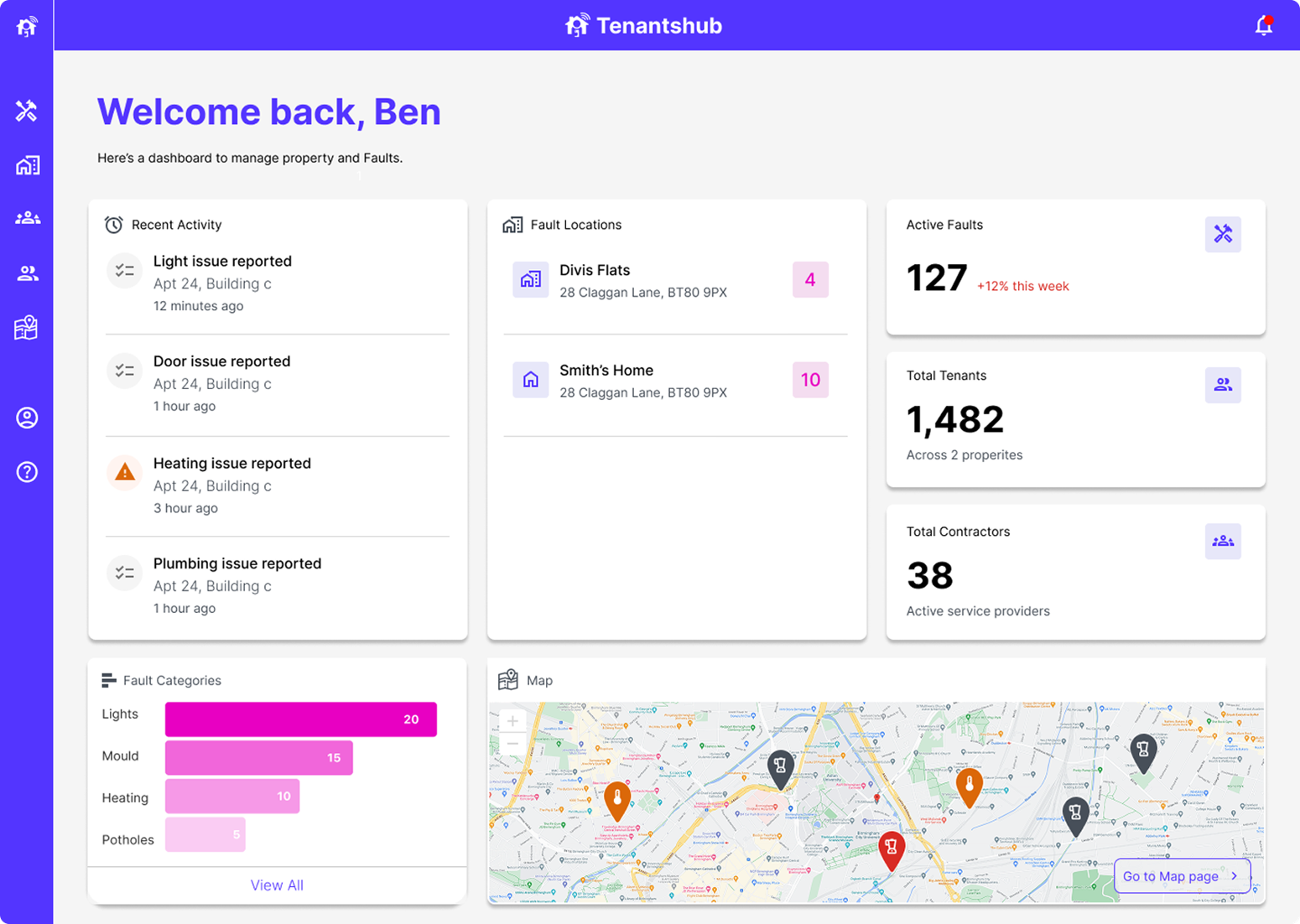
Our proprietary artificial intelligence models detect damp and mould, assess the severity of the hazards helping you prioritise and respond accordingly
When a potentially hazardous issue is detected we alert maintenance and managements by SMS, email and in-app notification.
In the case of damp and mould or other serious hazards we provide immediate information to the tenant about how they can keep safe.
Get Started
book personal setup call and product demonstration
Awaab's Law Frequently Asked Questions

Awaab’s Law establishes legally enforceable timeframes within which social landlords must investigate hazards, make homes safe and communicate with residents. It was introduced following the death of two-year-old Awaab Ishak after prolonged exposure to mould in his home.
Awaab’s Law currently applies to registered providers of social housing in England, including councils and housing associations. It applies to most residents living in social housing under a tenancy agreement.
Awaab’s Law does not yet apply to private landlords. The Renters’ Rights Act provides for it to be extended to the private rented sector, but the implementation date remains subject to consultation and has not yet been confirmed.
Phase 1 covers significant damp and mould hazards and all emergency hazards. An emergency hazard could include a gas or carbon monoxide leak, exposed electrical wiring, a major water leak, total loss of water, an insecure external door or a serious structural defect. Whether an issue is an emergency must be assessed according to the circumstances of the property and household.
From 30 November 2026, Phase 2 will extend the significant-hazard requirements to excess cold, excess heat, falls, structural collapse, fire and explosions, electrical hazards and domestic hygiene hazards. A later third phase will cover the remaining Housing Health and Safety Rating System hazards, excluding overcrowding.
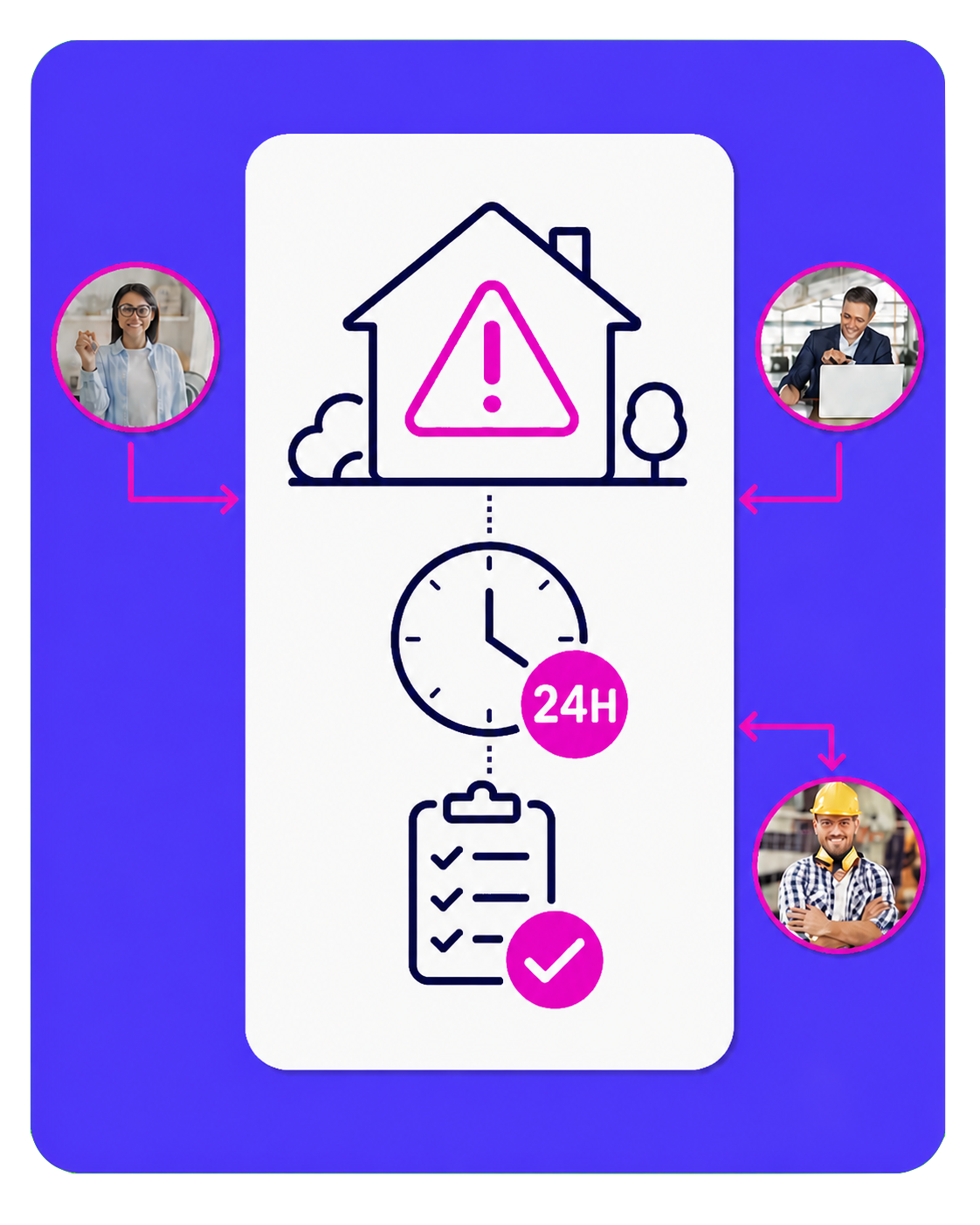
A potential emergency hazard must be investigated within 24 hours of the social landlord becoming aware of it. If the investigation confirms an emergency hazard, the necessary safety work must also be completed within that same 24-hour period.
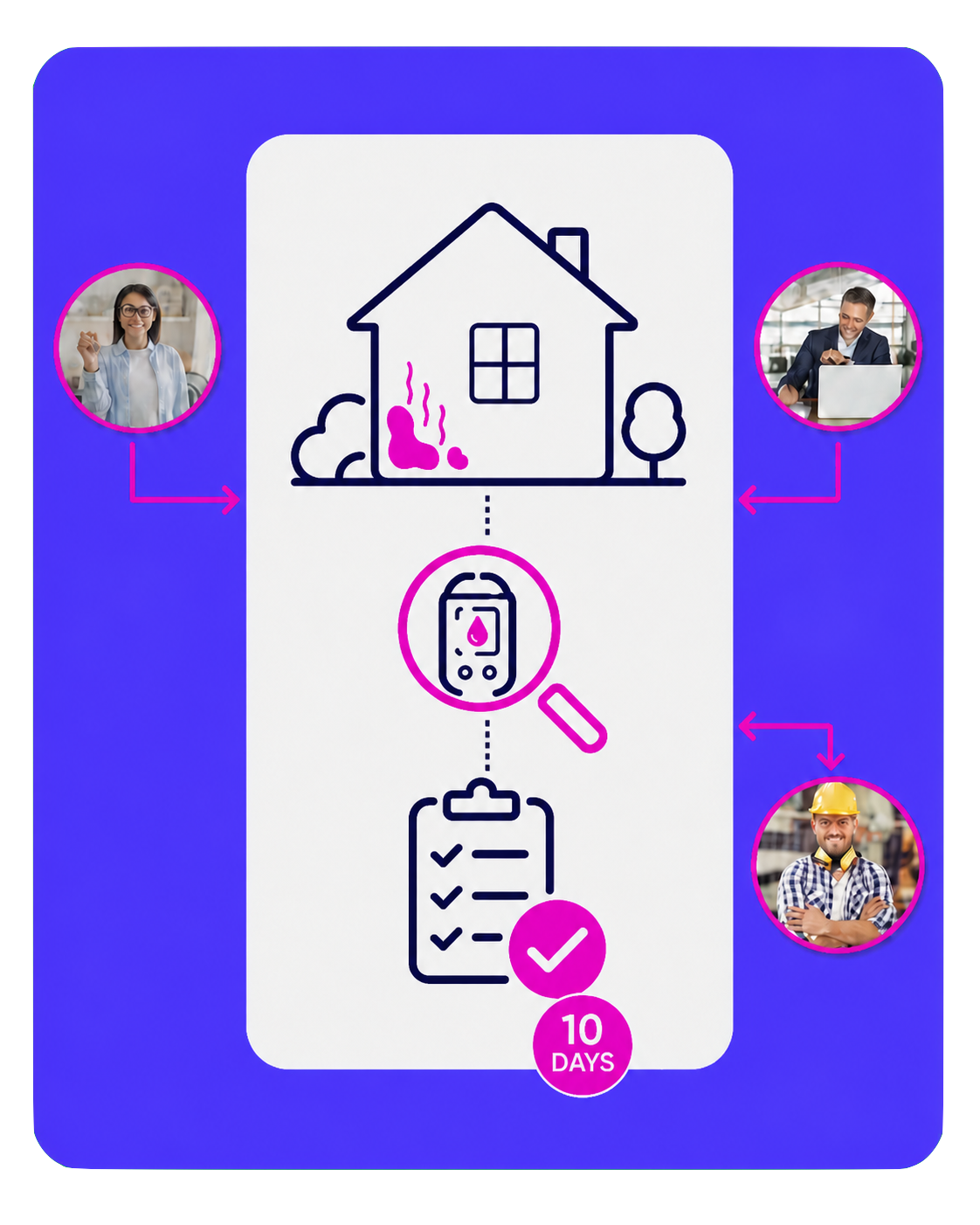
Potential damp or mould that may represent a significant hazard must be investigated within 10 working days of the landlord becoming aware of it. The landlord should act sooner where the circumstances or risks require a faster response.
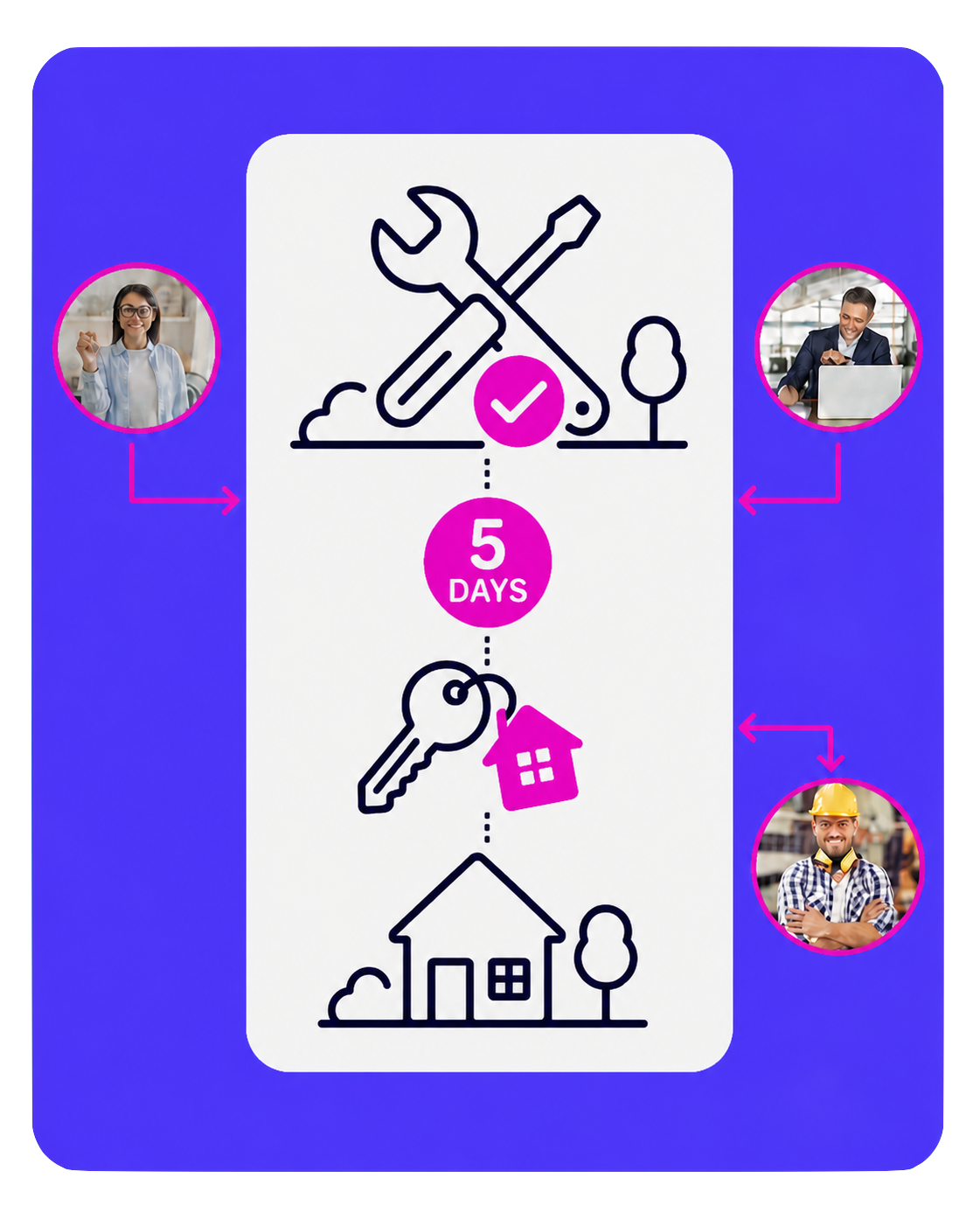
When an investigation identifies a significant damp or mould hazard, the social landlord must complete the relevant safety work within five working days of the investigation concluding. Temporary measures may be used where appropriate, but they must make the property safe.
The legal response timeline begins when the social landlord becomes aware of a potential hazard or a material change to an existing hazard. This could happen through a resident’s report, an inspection, a member of staff, a contractor, a representative or another public body. The date of awareness is treated as day zero
A significant hazard is one that presents a significant risk of harm to the health or safety of someone occupying the home. Landlords must consider the nature of the hazard, the condition of the property and the individual circumstances of the household.
An emergency hazard presents an imminent and significant risk of harm that a reasonable landlord would take steps to make safe within 24 hours. The assessment must consider both the condition of the property and the people living there.
Yes. Social landlords should consider factors such as age, disabilities, physical or mental health conditions and any other household circumstances that could increase the potential harm caused by a hazard. A resident does not have to be classed as vulnerable for a hazard to be significant.
No. Residents are not required to provide medical evidence before a landlord investigates a potential hazard. Where medical information is voluntarily provided, the landlord should take it into account when assessing the risk.
Landlords should not dismiss damp and mould reports by assuming that they are caused by a resident’s lifestyle. Everyday activities such as cooking, bathing and drying laundry naturally produce moisture and should not be used as a reason to avoid investigating or taking action.
A social landlord must usually send the resident a written summary within three working days of completing an investigation. It must explain whether a significant or emergency hazard was identified, what action is required and the target timescales for starting and completing that action.
A separate written summary may not be required where all the necessary safety and preventative work has been completed within the three-working-day period. The landlord must still tell the resident that the work has been completed and should retain an accurate record of what was done.
Yes. Social landlords must take reasonable steps to keep residents informed about the timing and progress of required work until it is completed. Information should be clear, accessible and suitable for the resident’s communication and language needs.
Relevant safety work removes or reduces the immediate risk within the statutory deadline. Supplementary preventative work addresses the underlying problem and helps stop the hazard from returning. A temporary measure may therefore make the property safe while a permanent repair is arranged.
The landlord must begin, or take steps to begin, supplementary preventative work within five working days of the investigation concluding. Where the work cannot begin within that period, it must start as soon as reasonably practicable and physically begin within 12 weeks at the latest.
If the necessary safety work cannot be completed within 24 hours for an emergency hazard or within five working days for a significant hazard, the landlord must secure suitable alternative accommodation for the household at the landlord’s expense.
Suitability must be considered according to the household’s individual needs. Alternative accommodation could include another social home, private rented accommodation, a short-term let or, where more suitable options are unavailable, hotel or bed-and-breakfast accommodation.
Residents can choose whether to accept alternative accommodation. The landlord should clearly explain the risks of remaining in the property and provide advice on reducing those risks. Raising concerns that a particular offer is unsuitable is not necessarily the same as refusing alternative accommodation altogether.
An investigation may sometimes be completed using photographs, videos, telephone calls or other available information. However, an in-person inspection may be required to assess the severity or cause of the hazard properly. In certain circumstances, a resident can request a renewed in-person investigation following a remote assessment.
Landlords should make reasonable efforts to arrange access, including offering suitable appointments, using different communication methods and considering residents’ accessibility or support needs. A landlord may have a defence where it can demonstrate that it took all reasonable steps to comply but could not obtain access.
The social landlord remains legally responsible for compliance, even when inspections and repairs are carried out by contractors or managing agents. Contractors should understand the statutory deadlines, report additional hazards and provide the information needed to maintain accurate records and resident communications.
Accurate records are essential for demonstrating compliance. Landlords should record when the hazard was reported, the resident’s circumstances, risk assessments, inspections, photographs, appointments, communications, safety work, preventative repairs and any offers of alternative accommodation.
Residents can use their landlord’s formal complaints procedure and may then take an unresolved complaint to the Housing Ombudsman. They may also pursue a housing conditions claim through the courts where appropriate.
Where a social landlord is found to have breached Awaab’s Law, a court may order the landlord to complete the repairs, pay compensation to the resident and pay some or all of the resident’s legal costs. Awaab’s Law itself does not create a separate system of automatic fines.
Property management software can help social landlords record the exact time a hazard was reported, prioritise emergency and significant cases, monitor statutory deadlines, assign inspections and repairs, communicate with residents and maintain a complete audit trail. Tenants Hub AI supports housing teams in managing these processes, but software should form part of wider policies, staff training, governance and professional decision-making.



All rights reserved
